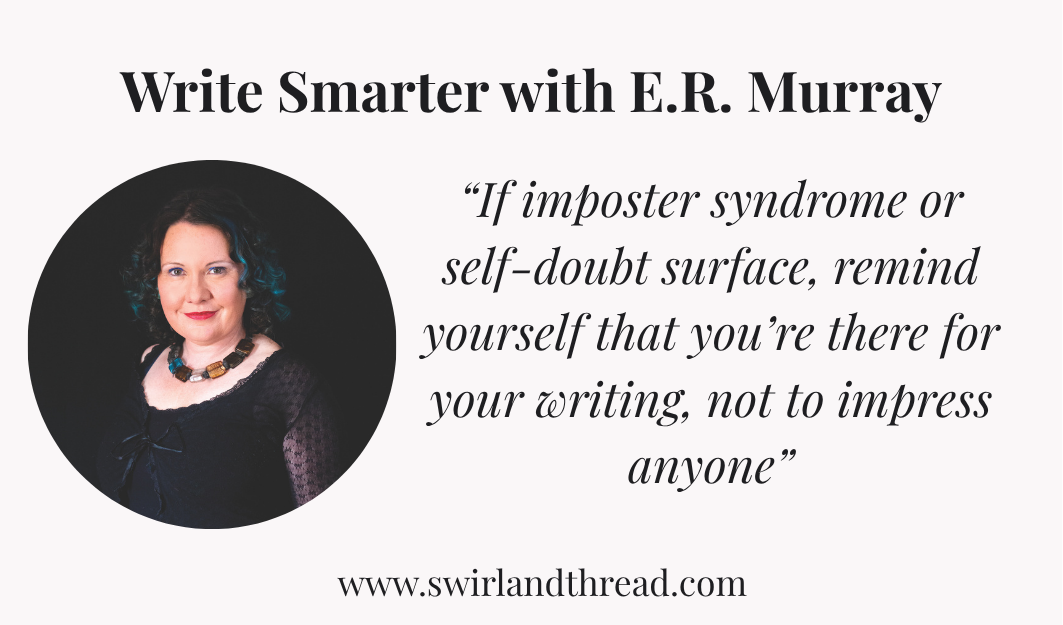
On this week’s Write Smarter Blog, I am delighted to introduce writer, creative writing facilitator and mentor, E.R. Murray. Based in West Cork, Elizabeth writes across age groups and genres, and is the author of five novels for children and young adults, including the award-winning Nine Lives Trilogy (Mercier Press). Her most recent book is Arabella Pepper – The Wild Detective (Natural World Publishing), which was longlisted for the 2025 Wainwright prize for Children’s Fiction.
You will find Elizabeth on Instagram @elizabethrosemurray or on her website www.ermurray.com.
Curating Space with Writing Residencies by E.R. Murray
The more I write, the more I have published, the more I realise that keeping the joy of writing alive is essential. Working on multiple projects, across different age groups and genres, keeps me motivated, but my writing is slotted around writing workshops in schools, libraries, hospitals and writing centres, as well as mentoring and manuscript critiques. Although satisfying, my work is time-consuming and my energy can fizzle out. And that’s when I take a look at my environment and make space for a writing residency.
A residency provides time and space away from everyday life to focus on writing. Suitable for writers at any stage, they come in a variety of formats. Solo spaces, writer-only spaces, residencies accepting artists across a variety of mediums, catered, self-catered, city-based or rural; you can even create your own. Residencies exist worldwide , so you can also combine writing with travel, but the trick to getting the most out of your concentrated writing time is to curate a residency that matches not just your tastes and needs but also the project you are tackling.
What’s the attraction?
For me, a residency is all about stealing back time to rebalance and reset. It’s a shift in focus, both investment and reward. It’s easy to start the year with clear goals and deadlines, time reserved for writing and heaps of motivation. But it’s even easier to fall behind. Other work takes over, unexpected deadlines land, and general life challenges throw good intentions off course or deplete motivation and energy until writing feels stale. That’s when a residency works its magic.
The time and space to write are gamechangers, but in my experience, it’s the headspace that proves most valuable. The freedom of focusing just on writing enables me to not only improve on projects, but to examine my practice, try new things, and dare to make mistakes and take risks. Then there’s rest and opportunities to replenish the creative well. I strongly believe that to write well, we must live life to the full. My best ideas and fixes never happen at the desk. That’s where the story develops and grows, but not where it arrives. Residencies charge me up so that when I return home, I can channel renewed energy into my regular working week.
Decisions, decisions…
Solo retreats tend to be my favourite option, but can lead to intense solitude, so I would recommend them only if you genuinely enjoy your own company and find it easy to focus. I despise routine, so I prefer self-catered residencies, but catered residencies can create a nice balance between solitude and interaction, working hours and downtime. Residencies with other creatives will have set ‘quiet hours’– everyone understands that you’re there to create and no one will be judging you or your boundaries – but there will be plenty of opportunity to mingle, which can help ease pressure. At first, I struggled with the idea of ‘wasting time’, but I soon learned how valuable these interactions can be.
Residencies are self-directed, which can be unnerving at first, so don’t be surprised if it feels a little strange or overwhelming. But trust in the process and give yourself time to settle and you’ll soon find your rhythm. In terms of environment; if you need coffee shops to work in or museums to browse for inspiration, choose a city-based retreat. If nature and silence will help your work flow and your mind switch off, try somewhere rural.
Tight for time
We often think that endless free time is all we need to create a masterpiece, but too much freedom can actually prove challenging. Sometimes, a single night is enough to get back on track and it’s amazing what you can accomplish.
I might book a solo night away, close to home, if I feel too entangled in work or the publishing world and I’m falling behind in my writing goals. I start as soon as I can check in and work as many hours as I can. I might finish some shorter projects, catch-up on my wordcount with a current novel, or follow some writing prompts to generate a batch of new ideas. This also works well as a night at home if the people you live with are going to be out: give yourself permission to focus and go for it.
If you can grab a weekend to yourself, it can provide a valuable shift in output, motivation and energy. A weekend allows additional space for rest alongside focused writing time. On a typical weekend retreat, I will tackle trickier projects, where deeper concentration is required.
This is also a great option with a couple of writer friends, especially seeing as writing can feel so solitary at times. Outline your expectations beforehand, so everyone is clear how the time might look, then immerse yourself in your writing while enjoying each other’s company.
Longer residencies
A week or two hits a sweet spot for longer projects – arranging a collection, novel edits, completing a script – but also for a creative reset. It provides enough time to explore and play and also be kinder to yourself. Writers often feel that every waking moment not spent working, parenting etc should be spent writing but this isn’t sustainable. You’re allowed a life too. I repeat: YOU’RE ALLOWED A LIFE TOO.
A month can be too long for many writers, but this is my sweet spot and I highly recommend if you like your own company and can afford the time. I usually redraft an entire novel as a month is perfect for shifting a nagging idea onto the page as an initial draft, or for finishing a book I’ve been working on for years. Also, if you like travel, this is a good way to discover somewhere new, try different things, experience new cultures, make friends and see where these new experiences lead. I write at the airport so I can award myself a day off when I arrive to settle in.
Some helpful advice
Allow time off: once we invest in a residency, we often feel like we have to write 24 hours a day. Remember: relaxation refreshes your brain, while sharing work and making new connections can be rewarding.
Have clear goals: plan so you can focus, but don’t be overly rigid. A new environment can inspire fresh ideas that are worth exploring also.
Bring entertainment: most residencies are tv and radio free, so bring books and magazines, download films, podcasts, or playlists so you can relax and refresh between writing sessions.
Immerse yourself: Soak up a new environment, try something new, skill share, or make friends with other creatives. A residency should enrich your overall experience, not just your writing
And finally…
Give yourself permission: If imposter syndrome or self-doubt surface, remind yourself that you’re there for your writing, not to impress anyone. As well as an investment, a residency is a reward for sticking at it through thick and thin.
[ About Arabella Pepper – The Wild Detective ]

When Arabella Pepper – nature lover, islander and Wild Detective – moves to the mainland with her family and her pet crow, Blue, her world falls apart. Making friends is difficult in busy, noisy Greytown, and Arabella’s new neighbours, the Pinch family, become instant enemies who will stop at nothing to get rid of Blue. Pets are going missing all over town, and for the first time, Arabella has a case she’s struggling to solve. To make matters worse, Mum and Dad are arguing and Arabella is worried her family is growing apart.
Faced with losing everyone she loves, can Arabella use her Wild Detective skills to solve her toughest mystery yet, keep Blue, and reunite her parents before it’s too late?
A story of friendship and bravery, the adventures of Arabella and Blue will keep you on the edge of your seat and steal your heart.
Longlisted for the 2025 Wainwright Prize in the children’s fiction category.